Designing a clearer service experience
Understanding the people, touchpoints and processes behind an internal marketing service.
The challenge
ALU’s marketing team provided consultancy services to teams across the organisation. The opportunity was to make that service easier for internal clients to understand and engage with.
Rather than starting with a website, I approached the problem as a service-design challenge: understanding who needed the service, what they were trying to accomplish, and how the marketing team could support those needs.
This meant looking beyond a single touchpoint and considering the wider experience — from discovering the service to engaging with the team behind it.
01. Building a shared understanding of the service
I started by involving potential users of the service directly in the discovery process.
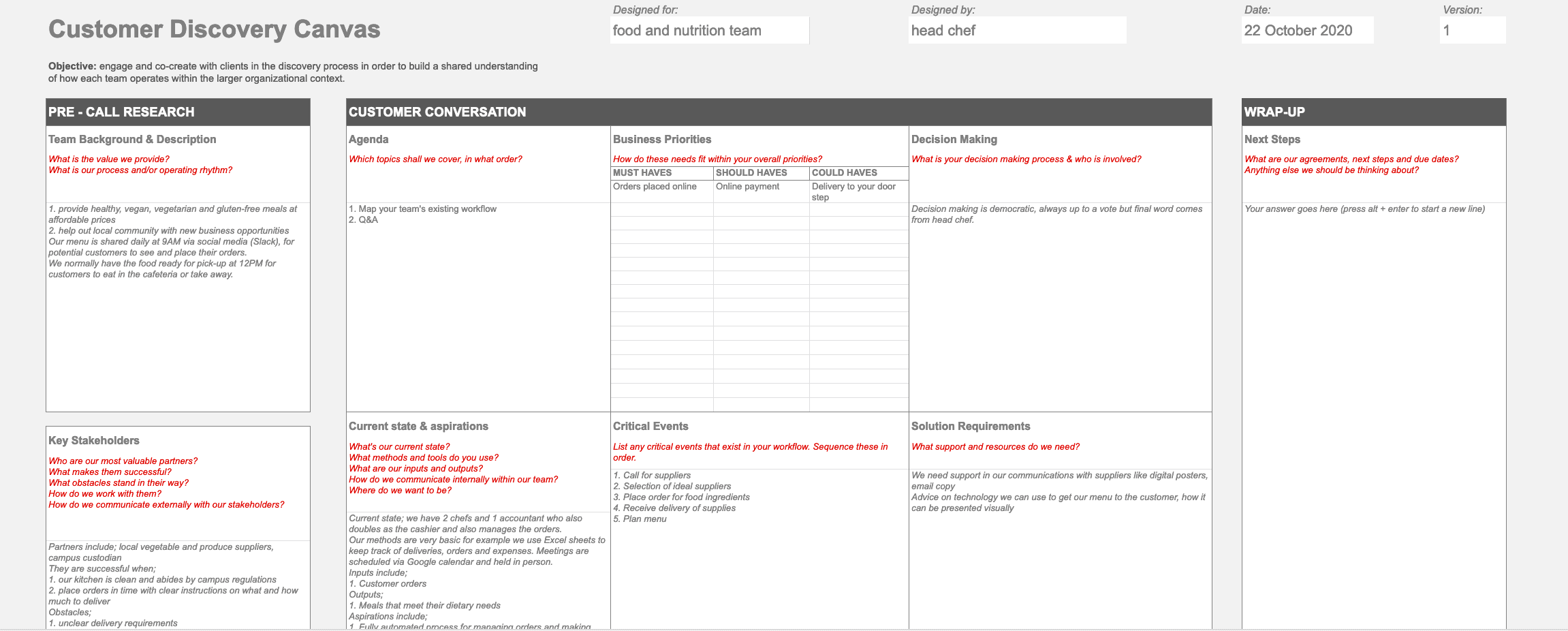
I facilitated a remote workshop using a customer discovery canvas, inviting teams across the organisation to share how they worked, what they needed and where marketing support could fit into their experience.
Bringing these perspectives together gave us a shared foundation for the work and helped us understand the service before deciding how it should be presented.
02. Turning individual perspectives into patterns
The workshop gave us a range of perspectives, but the next challenge was making sense of them collectively.
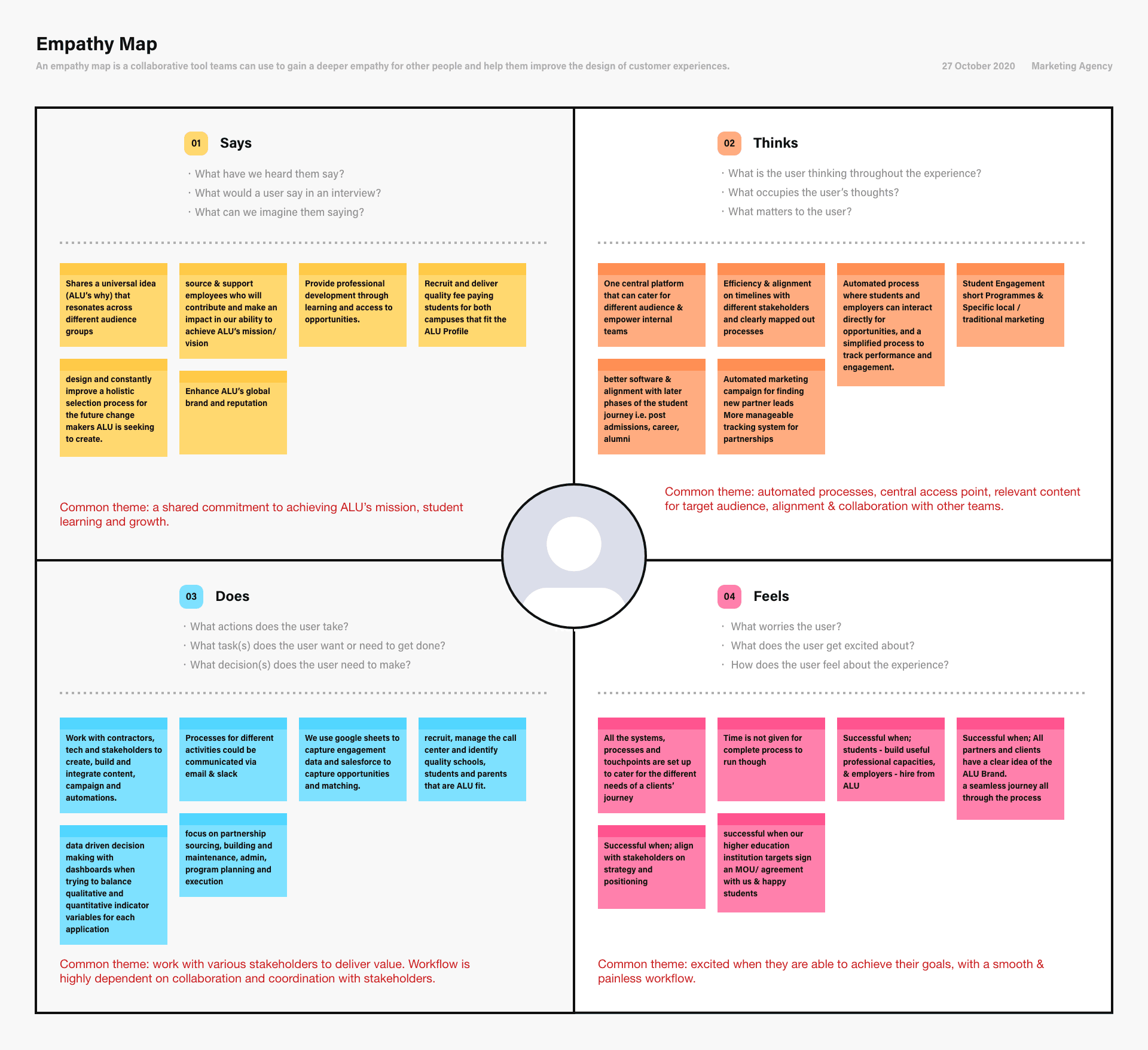
I synthesised what we'd learned and looked for recurring needs, behaviours and themes across the responses. I brought those patterns together in an empathy map, creating a more structured view of the people the service needed to support.
This helped move the conversation from individual requests toward a shared understanding of the customer.
03. Defining who the service needed to support
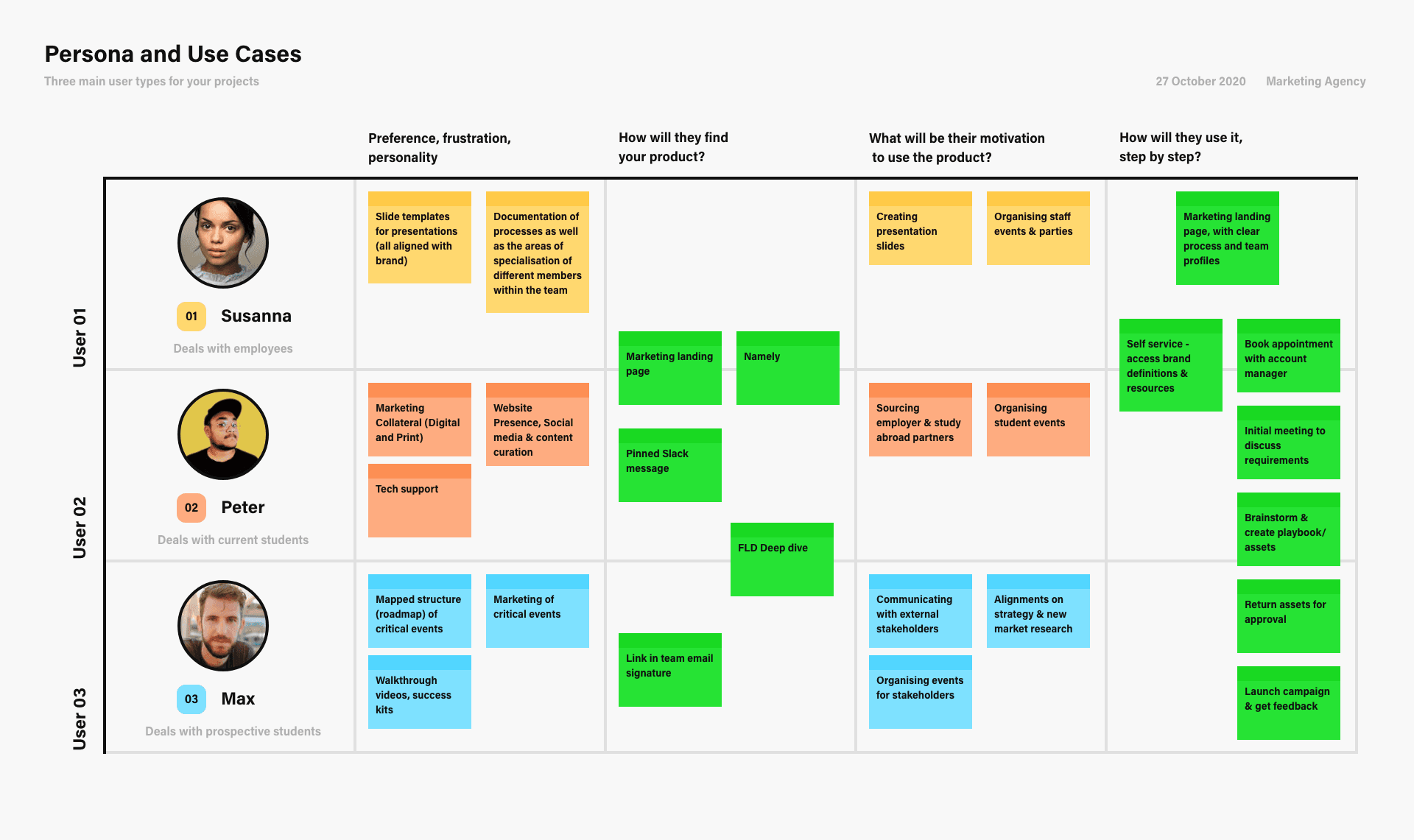
With those patterns established, I worked with the marketing team to translate our understanding into personas and use cases.
Rather than developing these in isolation, I worked collaboratively with the team, giving them opportunities to review, comment and contribute as the work developed.
The personas helped us articulate who we were designing for, while the use cases made the work more concrete by describing when and why someone might need marketing support.
04. Connecting the experience to the service behind it
Understanding the customer was only one side of the experience. We also needed to understand what had to happen behind the scenes for the marketing team to support them.
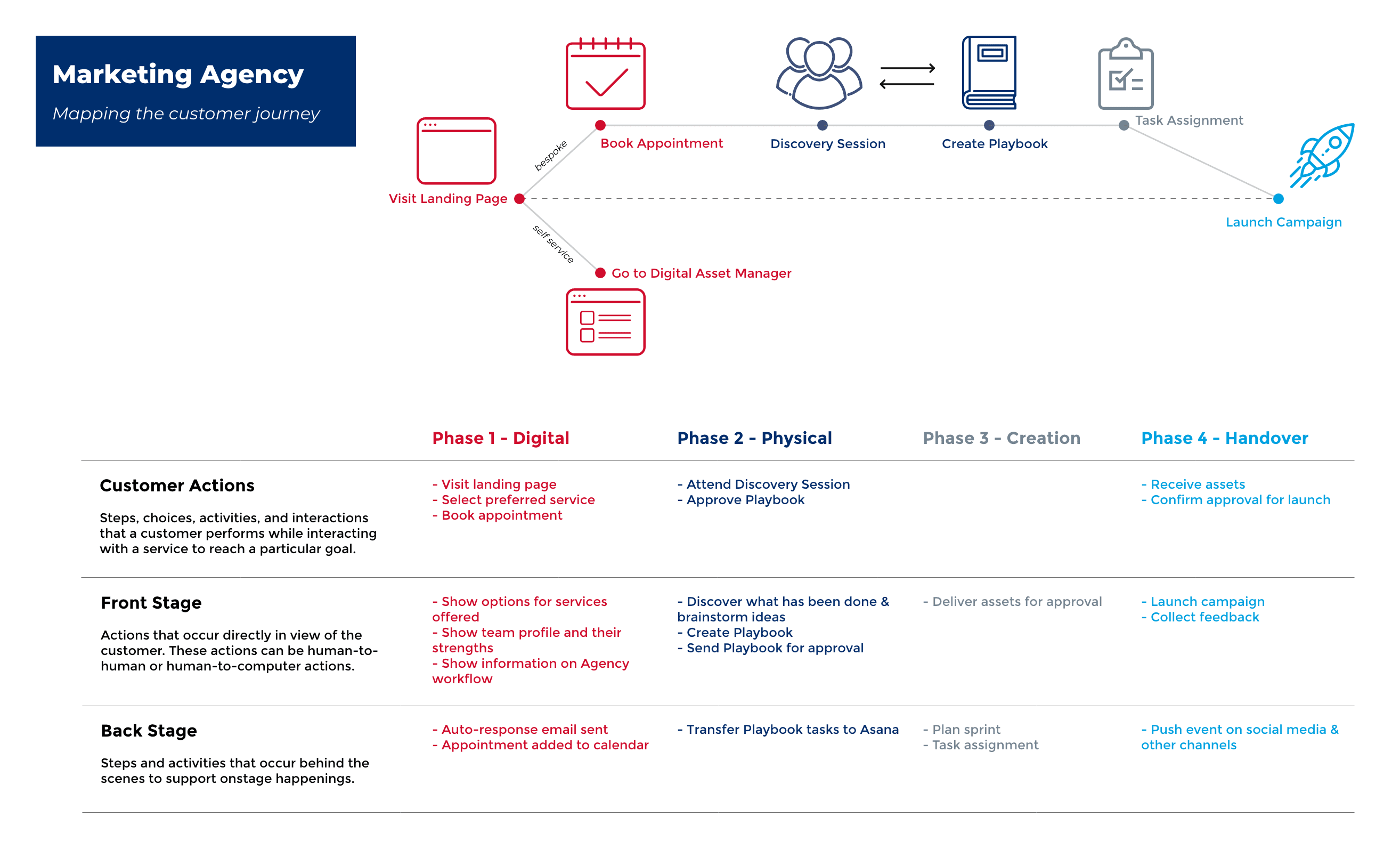
I worked with the team to map the service through a service blueprint, connecting the customer-facing journey with the touchpoints, people and internal activities required to deliver it.
This helped us see the experience as a connected system rather than a collection of individual interactions.
05. Translating the service into a clear entry point
Once we had a clearer understanding of the service itself, I explored how people could discover and access it digitally.
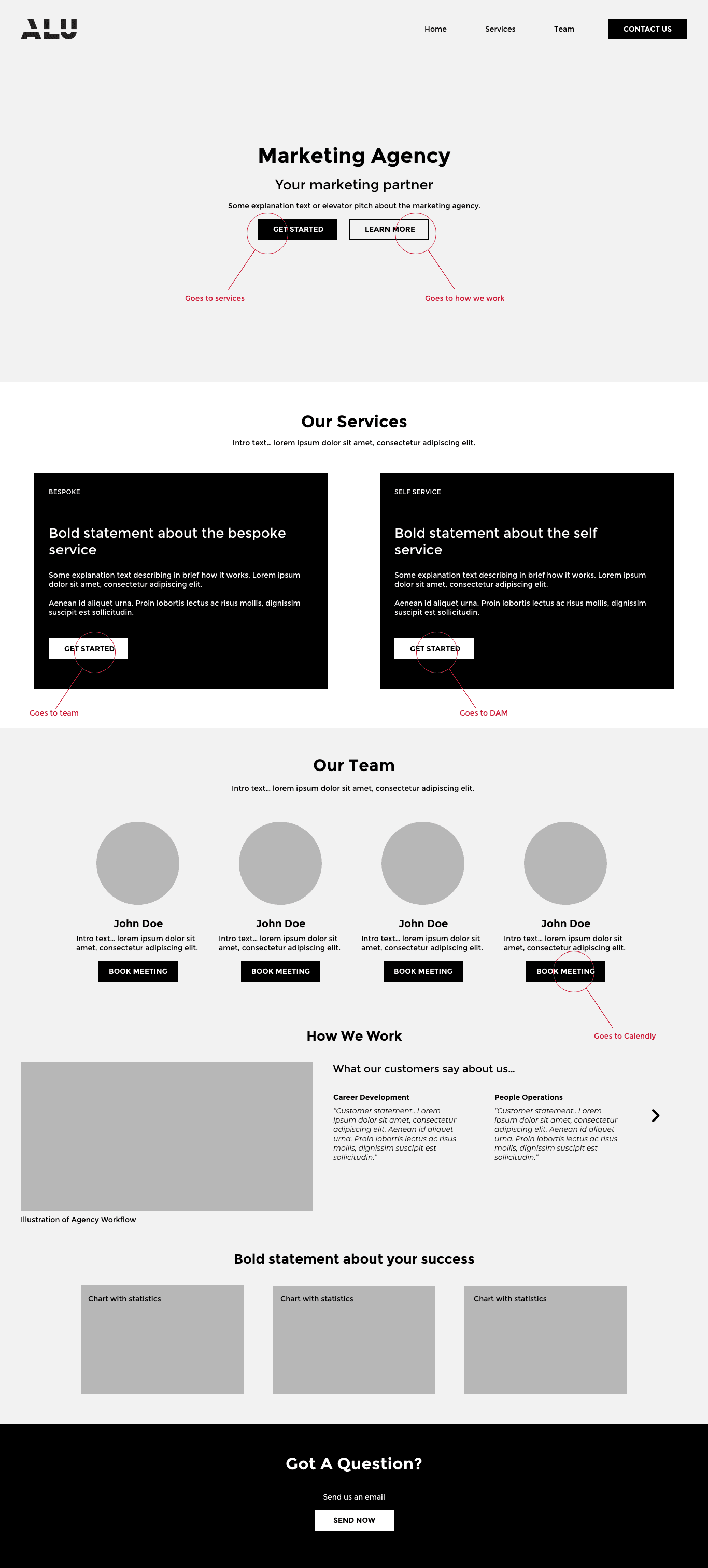
The landing-page concept introduced the marketing team, communicated the areas where they could provide support and gave internal clients different ways to engage with the service.
The interface wasn't the starting point of the project. It became one touchpoint within the larger service we had mapped.
What the work enabled
The project gave the marketing team a more structured way to think about its consultancy service — connecting the needs of internal clients with the touchpoints and processes required to support them.
For me, the most important outcome was the shift in perspective:
The problem wasn't simply how to design a better webpage. It was how to create a clearer service experience — and then determine what role the webpage should play within it.
Reflection
Not every experience problem begins or ends with an interface.
This project taught me to look beyond individual touchpoints and consider the people, processes and interactions that make an experience possible.
That perspective has stayed with me: before designing the interface, understand the system the interface belongs to.